Auckland (The NZ Today)
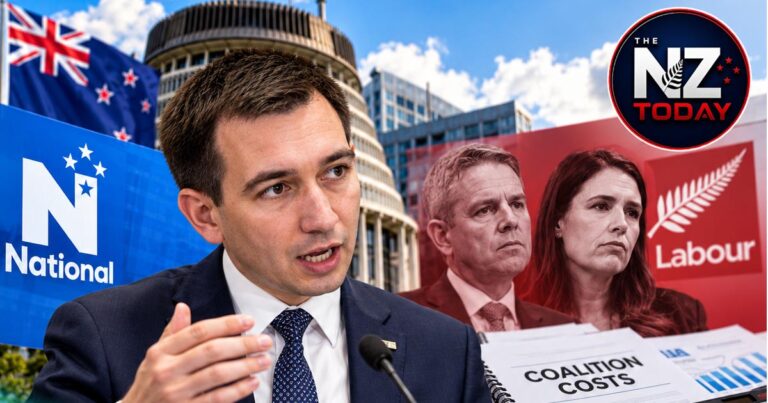
National campaign chair Simeon Brown has challenged Labour to explain what spending commitments it could accept from potential coalition partners, while declining to spell out what National itself might agree to with ACT or New Zealand First.
Brown called a media stand-up in Auckland to argue voters deserved to know what Labour leader Chris Hipkins could concede to the Greens in post-election negotiations.
National has repeatedly highlighted the Greens’ spending programme, with Brown claiming its costed policies alone amount to tens of billions of dollars. National says even accepting part of that agenda could require higher taxes or borrowing.
But when reporters asked Brown which policies National might accept from NZ First or ACT, he would not provide the same level of detail.
He argued the situations were different because National had already established fiscal rules and had a record in government of working within them.
Brown also dismissed questions about the potential cost of NZ First’s election promises, despite outside estimates suggesting some of its proposals could run into tens of billions of dollars.
The exchange highlighted a broader election issue facing both major parties: neither can guarantee in advance exactly which policies from smaller parties would survive coalition negotiations.
Labour has defended its own fiscal plan, with Hipkins arguing the party’s record in government showed it could manage the books while also delivering stronger wage growth.
National, meanwhile, has continued to warn that a Labour-led government would face pressure from the Greens to adopt higher spending and new taxes. Brown has specifically targeted Green co-leader Chlöe Swarbrick, despite Hipkins already ruling her out as finance minister.
Brown was also pressed on National’s own finance leadership.
He said Nicola Willis would remain National’s choice for finance minister and rejected suggestions ACT leader David Seymour could take the role.
Asked what would happen if Willis, who is contesting the election as a list-only candidate, did not return to Parliament, Brown declined to engage with the hypothetical and reiterated that National expected her to be finance minister.
The issue has gained added attention because some groups on the political right have encouraged National supporters to give their party vote to smaller coalition partners in an attempt to maximise the bloc’s total representation.
Such tactical voting could, depending on the final result, affect how many National list MPs return to Parliament.
Source: RNZ live election coverage