 Auckland (The NZ Today)
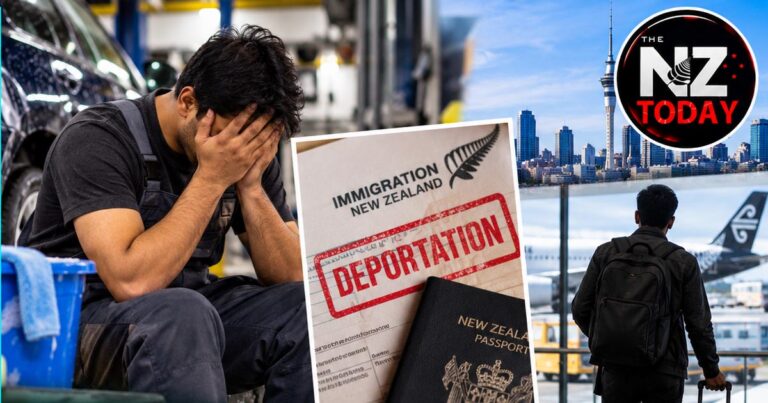
A 21-year-old Indian man who arrived in New Zealand on a student visa in early 2024, later lost his enrolment over poor attendance and subsequently sought refugee protection over claimed fears linked to the RSS and Khalistan has had his humanitarian appeal against deportation declined.
The Immigration and Protection Tribunal, in a decision dated 16 September 2026, found there were no exceptional humanitarian circumstances that would justify allowing the man to remain in New Zealand. The appellant is identified only as LY (India) in the Tribunal’s depersonalised decision.
According to the decision, the man first arrived in New Zealand in January 2024 holding a student visa.
His immigration situation began to change later that year. In November 2024, a further student visa application was declined after the educational institution where he had been studying terminated his enrolment because of poor attendance.
The following month, in December 2024, he lodged a claim with the Refugee Status Unit seeking recognition as a refugee and protected person.
That claim was declined in September 2025.
The man then pursued the matter before the Immigration and Protection Tribunal. According to the judgment, his refugee claim was based on an asserted fear that he would face harm in India from members of the Rashtriya Swayamsevak Sangh (RSS) because of his membership of Waris Punjab De (WPD) and his support for a separate state of Khalistan.
His humanitarian appeal against deportation liability was lodged alongside his refugee and protected-person appeal.
The Tribunal dealt first with his refugee case. That appeal was dismissed in August 2026, with the decision referring to the earlier case as LC (India) (2026) NZIPT 803176.
The humanitarian appeal then remained to be determined separately.
On 27 August 2026, the Tribunal wrote to the man’s then-lawyer advising that any information he wanted considered in support of the humanitarian appeal had to be provided within 10 working days.
The decision records that no response was received and that the man provided no separate submissions or information setting out humanitarian grounds for remaining in New Zealand.
As a result, the Tribunal assessed the appeal using the circumstances and evidence already available from his earlier refugee and protection case.
That meant the Tribunal again considered his claim that he feared serious harm from RSS members if returned to India.
However, the earlier refugee decision had already rejected several parts of his account as not credible.
According to the latest judgment, the Tribunal had previously rejected his claims that he had been targeted or assaulted by an individual referred to as AA and members of Shiv Sena or the RSS. It had also rejected claims that those people visited his home and threatened to kill him, that he received threatening calls or messages from them, and that he attended a pro-Khalistan protest in India.
No new evidence or submissions were provided during the humanitarian appeal that caused the Tribunal to revisit those earlier findings.
The Tribunal therefore found that the man had not established that he was at risk of harm if returned to India.
The decision also looked at the life he had established since arriving in New Zealand in January 2024.
By the time of the September 2026 decision, he had been living and working in New Zealand for just over two and a half years. During that period he had studied, although he did not complete his course, and had worked part-time.
The Tribunal also recorded that he was part of a gurdwara community, where he volunteered his time. It accepted that he was likely to feel relatively settled in New Zealand and had made friends and other connections.
However, the Tribunal found there was nothing exceptional about the level of settlement he had established and said a desire to remain in New Zealand was not, by itself, exceptional for the purposes of a humanitarian appeal.
The man’s parents and brother remained in Punjab, and the Tribunal said he had spent almost all his life in India and was familiar with life there.
While it accepted he might face some difficulties re-establishing himself and could be disappointed about returning without a New Zealand qualification, there was nothing before the Tribunal to suggest his family would be unable to help him resettle.
The Tribunal also revisited the extent of his involvement with Waris Punjab De and Khalistan-related activities.
The earlier refugee decision had accepted that he joined WPD while in India to help within the community. It also accepted that while in New Zealand he followed WPD and pro-Khalistan Instagram accounts and, during 2025, shared or attempted to share three Instagram stories relating to Khalistan and Amritpal Singh.
However, the Tribunal had not accepted that he was an active Khalistan supporter.
It recorded that he had not otherwise posted relevant social-media material and had not attended pro-Khalistan protests in either India or New Zealand.
The Tribunal also accepted that he had voted on one occasion in support of Khalistan in a referendum, but found his internet footprint was negligible and did not create a real chance that he would suffer serious harm in India.
Apart from his involvement with a gurdwara, the Tribunal found he had no credible association with Sikh organisations in New Zealand or internationally and was not politically active in any other way.
The judgment records that even if he retained what the Tribunal described as a low-level commitment to Khalistan, there was no evidence that he was likely to act in a way on return to India that would bring him to the adverse attention of Indian authorities.
The risk that he would be killed or seriously harmed because of his support for WPD or Khalistan was found to be “remote and speculative.”
In considering the humanitarian appeal, the Tribunal said the man was young, had spent most of his life in India and still had his immediate family there. His period in New Zealand was relatively brief, and it had not been established that he could not safely return and re-establish himself with family support.
The Tribunal therefore found there were no exceptional circumstances of a humanitarian nature meeting the threshold under section 207 of the Immigration Act 2009. Because that first requirement was not met, it did not need to consider whether deportation would be unjust or unduly harsh or whether allowing him to stay would be in the public interest.
The Tribunal also considered whether it should delay his deportation or order the grant of a temporary visa so he could arrange his affairs. It said no reasons had been provided for either course and made no such order.
The humanitarian appeal was accordingly declined on 16 September 2026.