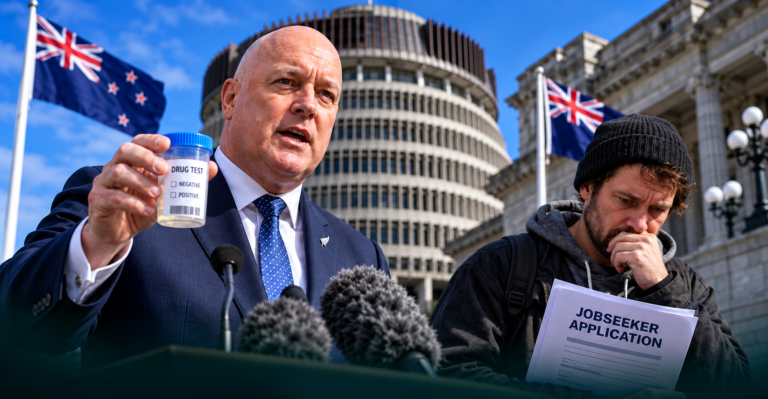
Labour pushes PM to pass Bill before election break
Auckland (The NZ Today)
A proposed law aimed at tackling modern slavery in supply chains has become the latest issue to face a race against time before Parliament enters its election recess, with Labour calling on Prime Minister Christopher Luxon to ensure the legislation is passed before MPs leave the Beehive.
Labour MP Camilla Belich, who has been championing the bill, has written to the Prime Minister and Parliament’s Business Committee asking for the legislation to be prioritised during the final sitting days.
The move follows concerns raised by charities and advocacy groups that New Zealand could delay important protections against exploitation if the bill does not progress before the election.
As per RNZ reporting, the legislation has already passed earlier parliamentary stages but still requires further debate and votes before it can become law.
So what exactly is modern slavery legislation?
Modern slavery laws are designed to address serious exploitation such as forced labour, human trafficking and situations where workers are trapped in abusive conditions. The focus is largely on supply chains — meaning businesses would be expected to better understand where their products and services come from and identify risks of exploitation.
Supporters say New Zealand needs stronger rules to ensure businesses are not unknowingly or indirectly benefiting from labour exploitation overseas, while also aligning with international moves towards greater corporate responsibility.
The push comes as other countries, including Australia, the United Kingdom and members of the European Union, have introduced or strengthened modern slavery and supply chain transparency requirements.
Belich has argued that New Zealand should not delay action, saying the issue is about protecting vulnerable workers and ensuring ethical business practices.
She has worked across party lines with National MP Greg Fleming to advance the bill, despite earlier disagreements over its progress through Parliament.
However, the Government has indicated there may not be enough parliamentary time remaining before the election period.
Prime Minister Christopher Luxon said completing the remaining stages would not be possible before Parliament rises, while Leader of the House Louise Upston said the bill returned from select committee at a time when there were limited Members’ Days available.
The Government has maintained it supports the legislation and indicated it could return in the next Parliament if it is not completed this term.
The debate now centres on parliamentary priorities — with Labour arguing there is still time to pass the bill if it is given priority, while the Government says the remaining parliamentary timetable makes that difficult.
The issue also highlights growing international attention on modern slavery risks, with governments and businesses facing increasing pressure to ensure goods entering global markets are not linked to forced labour.
Source: RNZ