Auckland (The NZ Today)
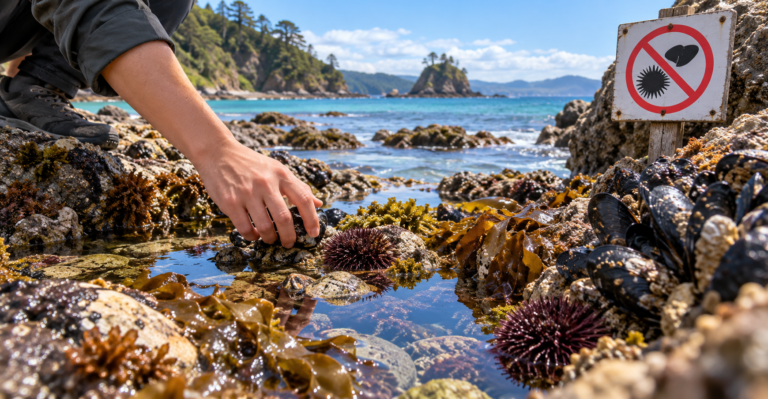
New restrictions on gathering marine life from large stretches of the Auckland and Coromandel coastline will now remain in place indefinitely, after the government moved to tighten protections for vulnerable intertidal species.
The rules cover parts of Auckland’s east and west coasts, Waiheke Island and the Coromandel, and apply to the shallow coastal zone exposed and covered by the tide, including beaches, rocky shores and rockpools.
The government says the changes are aimed at reducing pressure on species that can be easily overharvested from accessible coastal areas.
Fisheries Minister Shane Jones said the decision followed a review of intertidal harvesting and concerns about the amount of kaimoana being taken from some locations.
A temporary two-year restriction had already been introduced in parts of the northern Hauraki Gulf. The new approach goes further by placing ongoing limits across a much wider area.
The ban does not cover every species.
People will still be able to gather some species, including cockles, crabs, kina and pīpī, subject to the usual sustainability rules and daily limits.
For many other marine invertebrates, however, harvesting from the intertidal zone will no longer be allowed.
The protected area will generally extend to a two-metre depth, effectively covering places people can reach from shore when the tide is low.
Jones said rockpooling and gathering seafood were long-standing parts of New Zealand coastal life, but argued some areas were now under too much pressure from excessive harvesting.
He said the restrictions were intended to protect those ecosystems while still allowing sustainable gathering of selected species.
The government is also introducing new daily catch limits outside the intertidal zone as part of the wider changes.
Unlike the earlier temporary closure, the latest restrictions do not have a fixed end date. They will remain in place until a future Oceans and Fisheries Minister decides to revoke or amend them.
Officials will continue monitoring the affected coastlines to assess whether the measures are working and whether additional protections are required.
Source: Ministry for Primary Industries and Fisheries Minister Shane Jones; additional reporting context from RNZ.