 Auckland (The NZ Today)
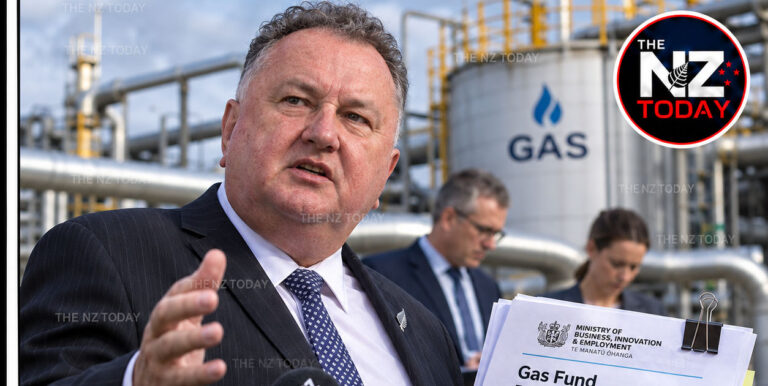
A $200 million Government fund designed to boost New Zealand’s declining gas supply is facing renewed scrutiny after Resources Minister Shane Jones indicated he would pause and review its operation, following official advice that some of its investments could amount to fossil fuel subsidies.
The development puts the fund’s financial arrangements back in the spotlight, particularly after ministers had repeatedly rejected suggestions that taxpayer money was being used to subsidise the oil and gas industry.
Jones told RNZ he did not accept officials’ interpretation but acknowledged that the Government needed to examine the potential implications for New Zealand’s international trade commitments.
He described the advice from officials as a “heretical conclusion” and said a review would be reasonable if the current governing parties returned to power.
The controversy centres on the Gas Security Fund, established to encourage faster development of domestic gas supplies. Its funding can support activities including drilling in existing fields, further exploration and gas storage projects.
The first major investment was announced in September, when the Government committed $23.5 million in loans to two Todd Energy projects. The projects are expected to increase available gas reserves, with enough additional supply to potentially meet the annual energy needs of around 80,000 households.
However, documents released through an Official Information Act request have raised questions about how those financial arrangements should be classified.
According to documents circulated by the Green Party and originally obtained by the New Zealand Herald, the Ministry of Foreign Affairs and Trade advised that the investments were likely to be considered subsidies under international trade rules.
Officials also acknowledged that although the fund was initially established on the understanding that its investments would not constitute subsidies, targeted and temporary subsidies had become necessary in certain circumstances to support energy security.
Treasury raised separate concerns about the financial terms offered to Todd Energy, describing the loans as comparatively concessionary, meaning the company was receiving financing on more favourable terms than those available through ordinary commercial lending.
Jones rejected that interpretation, arguing that money provided through a loan must be repaid and should not automatically be treated as a subsidy.
He maintained that the Government had chosen financial arrangements rather than direct equity investments to encourage more domestic oil and gas production.
The minister also criticised what he described as narrow interpretations from Treasury and foreign affairs officials, arguing that New Zealand needed to prioritise reliable energy supplies while households and businesses faced rising energy pressures.
The Green Party, however, has accused the Government of repeatedly misleading the public about the nature of the fund.
Co-leader Chlöe Swarbrick said ministers had previously insisted the arrangements were not subsidies because investments would be made on commercial terms.
She argued that the latest documents contradicted those assurances, pointing out that taxpayers were financing 70 per cent of the drilling costs for Todd Energy’s projects at rates more favourable than commercial lending.
Jones dismissed the criticism as political positioning, accusing the Greens of being fundamentally opposed to the fossil fuel industry.
The wider issue comes as New Zealand faces declining domestic natural gas supplies, increasing pressure on energy security and questions about how quickly alternative sources can meet demand.
Government information associated with the Todd Energy projects indicates that additional gas could begin flowing by the end of next year, using existing fields and infrastructure.
However, the prospects for expanding supply through entirely new discoveries remain uncertain. Earlier official advice indicated that newly discovered gas fields were unlikely to be developed and producing before 2035.
The promised review could therefore have implications beyond the immediate funding arrangements, potentially bringing New Zealand’s energy security priorities and international trade obligations into sharper focus.
Source: RNZ reporting