Auckland (The NZ Today)
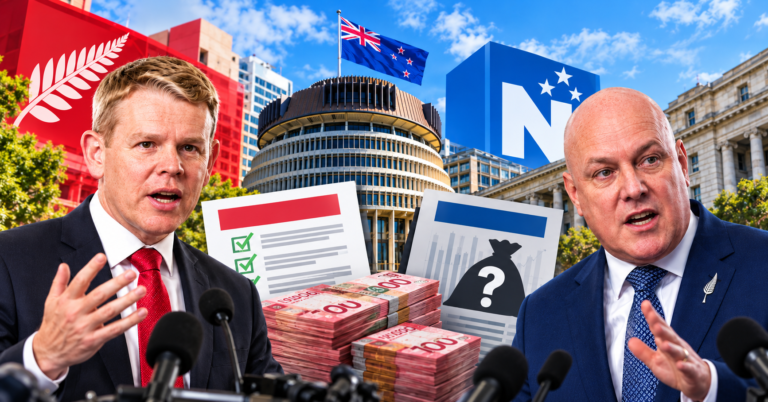
Labour’s fiscal plan has opened a fresh argument over election costings, with the party insisting it can fund its programme without increasing the existing spending allowances while National says several major commitments have not been properly accounted for.
The broad fiscal path outlined by Labour is actually close to Treasury’s current track.
Labour says it would keep the annual operating allowance at $2.4 billion and return the books to surplus in 2028/29. Treasury’s latest PREFU also forecasts an OBEGALx surplus in 2028/29, reaching about $4 billion that year.
The real dispute is over what sits underneath those headline numbers.
The biggest question is pay equity.
Labour has set aside $2.5 billion over four years for its promised $4-an-hour increase for about 65,000 care and support workers, but has not published a total cost for restoring the wider pay equity regime.
National says that is a major omission. Nicola Willis argues Treasury’s earlier estimate put the wider scheme at around $11 billion, which National says leaves about $8.5 billion not specifically allocated in Labour’s plan.
Labour says putting a fixed number against future settlements before bargaining takes place could undermine negotiations. It also points to around $10.5 billion in future operating allowances that remain unallocated, arguing that gives a future government room to meet pressures as they arise.
Fuel tax is another flashpoint.
Labour has promised to freeze fuel excise duty and road-user charges for three years, but National says the estimated cost — about $3.1 billion — should appear directly in the fiscal plan.
Labour’s response is that the policy would be managed through the National Land Transport Fund, rather than the core operating allowances used in its fiscal document.
That distinction matters because the PREFU itself warns transport revenues are under pressure. Treasury says planned fuel excise and road-user charge changes are part of the revenue assumptions underpinning the current fiscal outlook.
National has also challenged Labour over its proposed Future Fund, arguing the plan does not account for dividends that could stop flowing directly into Crown revenue if selected state-owned companies were placed into the fund.
Labour has not yet named which companies would be included, saying those decisions would require official advice if it forms the next government.
Health spending has become another contested area.
National says Labour has not fully provided for later health cost pressures and also questions whether its graduate nurse guarantee can simply be absorbed within existing health allocations.
Labour says the nurse policy would be funded through its health provision and argues other policies, including improving access to primary care, could reduce pressure elsewhere in the system.
Despite the political language around “holes” and “fraud”, Treasury’s own numbers show how narrow the margin can be between a deficit and surplus.
The PREFU forecasts OBEGALx moving from a $6.8 billion deficit in 2026/27 to a $0.8 billion deficit in 2027/28, before turning into a $4 billion surplus in 2028/29. Treasury also warns that demographic pressures, economic shocks and higher costs could still weaken that path.
That leaves both major parties defending not just what they have chosen to fund, but the assumptions they are making about future Budgets.
Labour maintains its promises can be delivered within the existing fiscal track.
National says the unanswered costs mean Labour’s plan understates what a future government would actually have to spend.
Source: Labour fiscal plan, National Party statements and RNZ.