Jaspreet Singh Rajpura
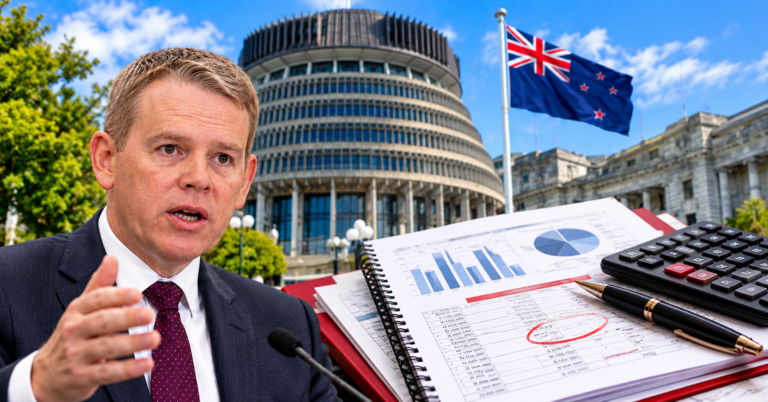
The political temperature is at its peak as New Zealand approaches the upcoming election. Parties are opening their boxes of promises, attacking each other’s policies, and every side is presenting itself as the answer to the country’s problems. But amid all this political noise, one fundamental question is being left behind — when will life actually become easier for ordinary New Zealanders?
This is not merely a feeling. The numbers also reflect this public unease. In the September 2026 Ipsos Issues Monitor, 63% of New Zealanders identified inflation/cost of living as the country’s biggest issue. Healthcare was second at 44%, the economy third at 34%, and unemployment fourth at 21%.
According to Stats NZ, annual inflation had climbed back to 4.1% by June 2026, while petrol prices had risen 27.5% over the year. Unemployment also reached 5.6% in the June quarter, with around 171,000 people unemployed
So, the central question of this election should not simply be who will become the next Prime Minister. The question should be: which policies will bring down a family’s weekly bills, create more jobs, make healthcare more affordable and accessible, and increase people’s real disposable income?
Supermarkets: A Years-Old Problem, now a Major Election Issue
The problem in New Zealand’s grocery sector is nothing new. As far back as 2022, the Commerce Commission said competition in the retail grocery sector was not working well for consumers.
Four years later, the picture has not changed dramatically. According to the Commerce Commission’s June 2026 report, the major supermarket groups still control more than 80% of the national grocery market, while retail prices have increased.
Now, ahead of the election, both major parties are talking about structural change. National has proposed separating the Foodstuffs structure so that PAK’nSAVE could become a nationwide competitor independent of New World/Four Square — although this would be subject to an independent Commerce Commission assessment and a net-benefit test.
Labour has also proposed intervention in the grocery market, including wholesale access for smaller supermarkets, restrictions on supplier fees, and independent wholesale operations for Foodstuffs and Woolworths.
These are serious proposals, but voters now need answers beyond the headlines: how much would these reforms reduce a $250 grocery bill, when would that reduction happen, and what is Plan B if competition does not increase as expected?
The real test of a policy is not the announcement — it is the household grocery bill.
Temporary Relief or a Long-Term Solution?
Labour has announced policies including a $20 weekly public transport fare cap, three free GP visits, and free prescriptions.
Such policies can provide direct relief to household budgets, and that cannot be ignored. But the question remains: does a subsidy address the root causes of inflation, or does it simply reduce its impact for a period of time?
With unemployment at 5.6%, inflation at 4.1%, and fuel prices putting pressure on household budgets, voters need a clear plan not only for short-term relief but also for productivity, wages, investment, competition and sustainable job creation.
Relief is necessary, but relief cannot become a substitute for economic reform.
Immigration: A Necessary Debate, But Is It the Biggest Issue?
There should be a serious policy debate about immigration. How many people should come into the country, what skills New Zealand needs, how infrastructure should keep pace with population growth, and how migrant exploitation should be prevented — these are all legitimate questions.
But public priorities cannot be ignored either. In the September Ipsos survey, the main concerns identified by New Zealanders were cost of living, healthcare, the economy and unemployment.
Despite this, immigration has become a significant part of the election campaign debate.
NZ First has announced a policy to “substantially reduce” non-essential immigration, link population growth to infrastructure capacity, and introduce more restrictive immigration settings. ACT has also talked about new tests and settings around migrants’ contribution, infrastructure and shared civic values.
On the other hand, Labour has proposed increasing the required residence period for permanent residence eligibility from two years to four years, strengthening protections against migrant exploitation, and reviewing parent visa, health and English-language requirements. The current National-led Government has also changed the Parent Resident Visa selection system, under which, from 5 October, approximately 90% of EOIs will be selected in date order and 10% through a ballot.
It would therefore not be correct to say that there are no policies on immigration. The real question is whether the level of political attention being given to immigration during the election campaign is proportionate to the biggest concerns New Zealanders themselves say they have.
The Need to Rise Above Identity Politics
When the economy is under pressure, unemployment is rising and household budgets are tight, issues involving immigration, race, identity or culture can very quickly become polarising political tools.
The same standard should apply to every party. If a party wants to reduce immigration, it should explain by how much, in which categories, and what impact that would have on labour shortages, GDP, housing and infrastructure.
If a party wants to increase immigration or make pathways easier for migrants, it should also explain how housing, hospitals, schools and infrastructure will absorb that population growth.
Whichever side the slogan comes from, without data and an implementation plan, it does not become a policy.
Our Editorial View
In the 2026 election, what New Zealand voters need most is not another slogan, but policies that can deliver measurable results.
Sixty-three percent of people identify the cost of living as their biggest concern. Unemployment is at 5.6%. Inflation is at 4.1%. Major supermarket groups still control more than 80% of the grocery market. Campaign rhetoric will not change these numbers.
So, whether it is National, Labour, the Greens, ACT, NZ First or any other party, the questions should be the same:
- When will your policy bring down my grocery bill?
- How will my income and purchasing power increase?
- Where will new and sustainable jobs come from?
- How will waiting times for GPs and hospitals be reduced?
- And where will the money come from to deliver all of this?
Elections are not simply about changing faces. Elections give people an opportunity to decide which policies should determine the direction of their country.
If politics cannot improve the ordinary citizen’s household budget, job security, healthcare and the future of their children, then what do all the big slogans and political battles really mean to that citizen?