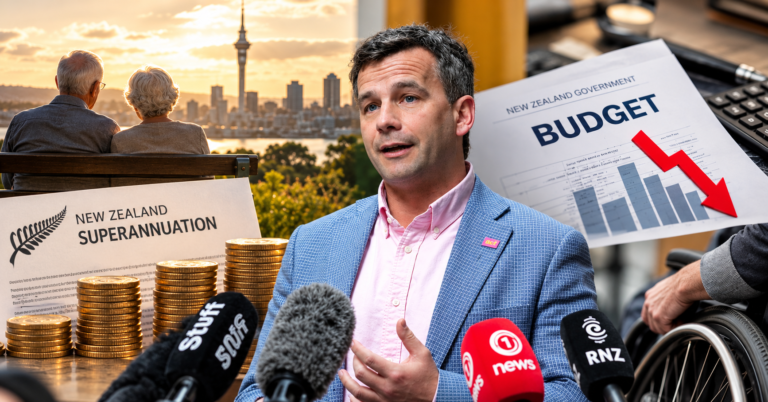
 (Auckland, The NZ Today): New Zealand’s construction, engineering and infrastructure sectors are expected to benefit significantly from Budget 2026, with billions of dollars earmarked for major projects across health, transport, defence and public services.
The Government’s latest Budget includes a $5.5 billion package for health, more than $3 billion for defence capability upgrades, hundreds of millions for prisons and police facilities, and ongoing investment in transport and public infrastructure.
Industry groups say the spending is expected to generate thousands of jobs over the coming years while providing certainty for businesses involved in construction, engineering, project management and related services.
One of the largest commitments is funding for health infrastructure, including land acquisition for a future South Auckland hospital and upgrades aimed at supporting growing demand on healthcare services.
The defence sector is also set to receive a major boost, with funding allocated for fleet upgrades, operational capability improvements and workforce support. Construction and maintenance contractors are expected to benefit from several projects linked to the investment.
Business leaders have welcomed the focus on infrastructure, arguing that large-scale projects provide long-term economic benefits beyond the immediate jobs they create. Improved infrastructure can increase productivity, support population growth and strengthen regional economies.
Economists note that government spending alone will not solve all challenges facing the construction sector, which has experienced slowing activity in some residential markets. However, major public projects can help provide stability during periods of uncertainty.
With the Government aiming to return the country’s books to surplus within the next few years, ministers say the focus remains on targeted investments that support both economic growth and essential public services.
As projects move from planning to delivery, businesses across multiple sectors will be watching closely for tender opportunities and workforce demand generated by the new spending commitments.